

History Education Is Missing What Matters Most
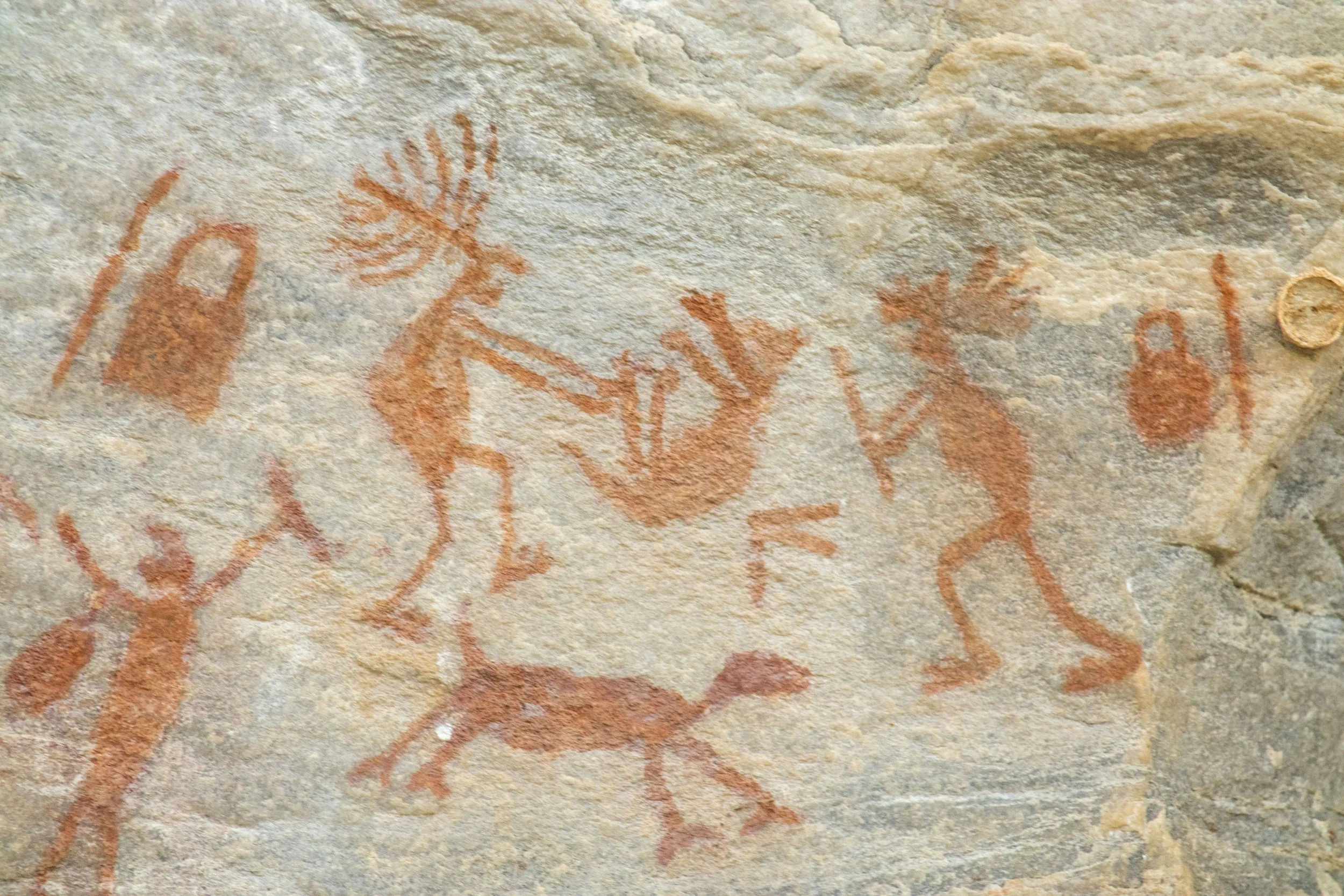
There is a growing gap between the complexity of the modern world and the way young people are prepared to understand it.
Across news, policy, and public debate, events are rarely isolated. They are shaped by long-term processes, overlapping causes, and competing interpretations. Yet many students leave school with a version of history that feels contained, selective, and largely national in focus. The issue is not simply how history is taught, but what is prioritised and how it is framed.
History is often presented as a sequence of events. In reality, it is better understood as a system of relationships.
The UK National Curriculum reflects this ambition. It states that history should help pupils understand “the complexity of people’s lives, the process of change, the diversity of societies and relationships between different groups” (Department for Education, 2013). At its best, history education develops the ability to interpret evidence, recognise perspective, and understand cause and consequence over time. Research in history education shows that these ways of thinking do not emerge automatically; they require explicit teaching and repeated practice (Wineburg, 2001; Seixas & Morton, 2013).
Without this, history risks becoming something that is remembered rather than something that is used.
One of the clearest problems lies in how key topics are framed.
The British Empire, for example, is widely taught, but often through a narrow lens. Students may learn about expansion, trade, and Britain’s global reach, yet less consistently explore the experiences of colonised populations, the economic systems that underpinned imperial power, or the long-term consequences that continue to shape global relationships. Historians have shown that imperial systems played a central role in shaping patterns of global inequality and political development (Darwin, 2009; Elkins, 2022). When this broader context is missing, contemporary issues such as migration or geopolitical tension can appear disconnected from their historical roots.
A similar pattern emerges in the teaching of migration. It is often presented as a modern or post-war phenomenon, rather than as a long-term historical process. In reality, migration into Britain is closely tied to imperial relationships, labour needs, and evolving legal frameworks. Understanding these connections helps to explain how modern Britain has been formed over time (Panayi, 2010). Without them, migration can seem sudden rather than historically embedded.
Even when topics are firmly established within the curriculum, such as the Industrial Revolution, the emphasis can remain narrow. Students typically learn about technological change and industrial growth within Britain, but less attention is sometimes given to the global systems of labour and resource extraction that made this growth possible. These systems continue to influence patterns of economic inequality today, yet the connection is not always made explicit.
The Cold War provides another example. It is often taught as a clearly defined historical period with a beginning and an end. However, many of the alliances, tensions, and regional conflicts that developed during that time continue to shape international relations. Without recognising this continuity, present-day events can appear fragmented or difficult to interpret.
Running through all of these examples is a deeper issue. History is constructed. It is shaped by perspective, selection, and interpretation. When students are not consistently exposed to multiple viewpoints or encouraged to question how narratives are formed, they may come to see history as fixed and neutral. This limits their ability to engage critically with both past and present.
Assessment structures can reinforce this limitation. The need to prepare students for examinations often places emphasis on recall, structured writing, and performance under time constraints. These skills have value, but they can come at the expense of deeper engagement with interpretation and analysis. For some learners, particularly those with dyslexia, ADHD, or processing differences, this creates an additional barrier. They may understand complexity but struggle to demonstrate that understanding within rigid formats.
These challenges do not remain within the classroom. They shape how individuals interpret the world as adults.
In a media environment characterised by rapid information flow and competing narratives, the ability to evaluate sources, recognise bias, and understand complexity is essential. Without a strong foundation in historical thinking, individuals may rely on simplified explanations rather than layered understanding. This is not a question of political stance, but of analytical capacity.
Inclusive history education therefore matters not only for equity within schools, but for the quality of public understanding more broadly. Approaches that provide multiple ways of accessing content, such as visual timelines, structured discussion, and alternative forms of expression, allow a wider range of learners to engage with complexity. The Universal Design for Learning framework highlights the importance of designing learning environments that support diverse learners in this way (CAST, 2018).
At Young Trees, the emphasis is on developing the ability to think, rather than simply to recall. In history, this means helping learners to explore relationships between events, engage with multiple perspectives, and connect past developments to present realities. It also means recognising that understanding does not always present itself in the same way for every learner.
The question shifts from what a student can remember to what they can make sense of.
History is not simply a record of what has happened. It is a way of understanding how the present has been shaped. If the curriculum presents a partial or disconnected picture, it limits that understanding. In a complex and interconnected world, history education must do more than describe the past. It must help learners interpret it.
What the UK History Curriculum Should Look Like Instead
If the problem with history education lies not only in how it is taught but in how it is structured, then improving it requires a shift in emphasis rather than an expansion of content.
The purpose of the curriculum should not be to ensure that students can recall the past accurately. It should be to ensure that they can interpret it, question it, and use it to understand the present. A strong history curriculum therefore begins not with a list of topics, but with a clear understanding of the kind of thinking it aims to develop.
Historians identify several core concepts that underpin this thinking, including evidence, interpretation, cause and consequence, continuity and change, and perspective (Seixas & Morton, 2013). These should not sit alongside content as additional objectives; they should shape how that content is organised and taught.
This does not require a complete overhaul of what is studied. It requires a reframing of familiar topics.
The British Empire, for example, can be taught not simply as a period of expansion, but as a system that connected economies, societies, and political structures across the world. When approached in this way, it becomes possible to understand how its effects continue to influence migration patterns, global inequalities, and international relationships.
Migration itself should be presented as an ongoing historical process rather than a series of isolated events. When students explore how movement has been shaped by empire, labour demands, and legal frameworks, they gain a clearer understanding of how modern Britain has developed over time.
The Industrial Revolution can similarly be reframed. Rather than focusing solely on domestic technological change, teaching can highlight the global networks of labour and resources that supported industrial growth. This allows students to see how historical developments connect to contemporary economic structures.
The Cold War offers another opportunity to emphasise continuity. Instead of being treated as a concluded period, it can be explored in terms of the alliances, tensions, and political dynamics that persist. This helps students understand current geopolitical relationships as part of a longer historical trajectory.
Across all of these examples, the central shift is from isolation to connection. Events are not discrete; they are part of systems that evolve over time.
This shift also has implications for assessment. If assessment continues to prioritise recall and time-pressured written responses, teaching will inevitably follow. A more balanced approach would allow students to demonstrate understanding through extended analysis, structured discussion, and inquiry-based work. This would create space for deeper engagement with interpretation rather than surface-level performance.
Such an approach is also more inclusive. Students differ in how they process and express understanding. Some may excel in written responses, while others demonstrate insight more effectively through discussion, visual representation, or structured analysis. Designing a curriculum that allows for multiple forms of engagement supports a wider range of learners and aligns with research on inclusive education (CAST, 2018).
Within this model, the role of the teacher shifts. Rather than primarily delivering content, the teacher guides students in how to interpret it. This involves modelling analysis, structuring discussion, and supporting learners as they engage with complexity. It requires subject knowledge, but also an understanding of how thinking develops over time.
At Young Trees, this shift is central. The focus is not on how much content has been covered, but on what understanding has been developed. In history, this means creating learning environments where students can explore relationships, examine perspectives, and connect past and present. It also means recognising that complexity should be accessible, not reduced.
If these changes were implemented, the content of the curriculum might not look dramatically different. Students would still study empire, migration, industrialisation, and conflict. The difference would lie in how these topics are understood. They would be seen not as isolated units, but as interconnected processes that continue to shape the world.
The question is not whether students learn history. It is whether they learn how to use it.
A curriculum that prioritises recall produces knowledge. A curriculum that prioritises interpretation produces understanding. In a world defined by complexity, it is the latter that matters.
References
Black, J. (2014). Eighteenth-Century Europe and the Wider World.
Darwin, J. (2009). The Empire Project.
Department for Education. (2013). National Curriculum in England: History.
Elkins, C. (2022). Legacy of Violence: A History of the British Empire.
Ofsted. (2021). Research Review Series: History.
Panayi, P. (2010). An Immigration History of Britain.
Seixas, P., & Morton, T. (2013). The Big Six Historical Thinking Concepts.
Wineburg, S. (2001). Historical Thinking and Other Unnatural Acts.
CAST. (2018). Universal Design for Learning Guidelines.
Further Reading
For Parents
David Olusoga — Black and British
An accessible and well-researched account of Britain’s global past and how it continues to shape modern society.
Akala — Natives
Explores the relationship between education, identity, and historical narrative in contemporary Britain.
For Educators
Christine Counsell — Curriculum Thinking in History
A leading voice on curriculum design, focusing on how to build deep disciplinary understanding.
Ofsted — History Research Review
A comprehensive guide to effective history curriculum and teaching practice.
Seixas & Morton — The Big Six Historical Thinking Concepts
A widely used framework for teaching historical reasoning, interpretation, and analysis.