

The Essentialness of Play
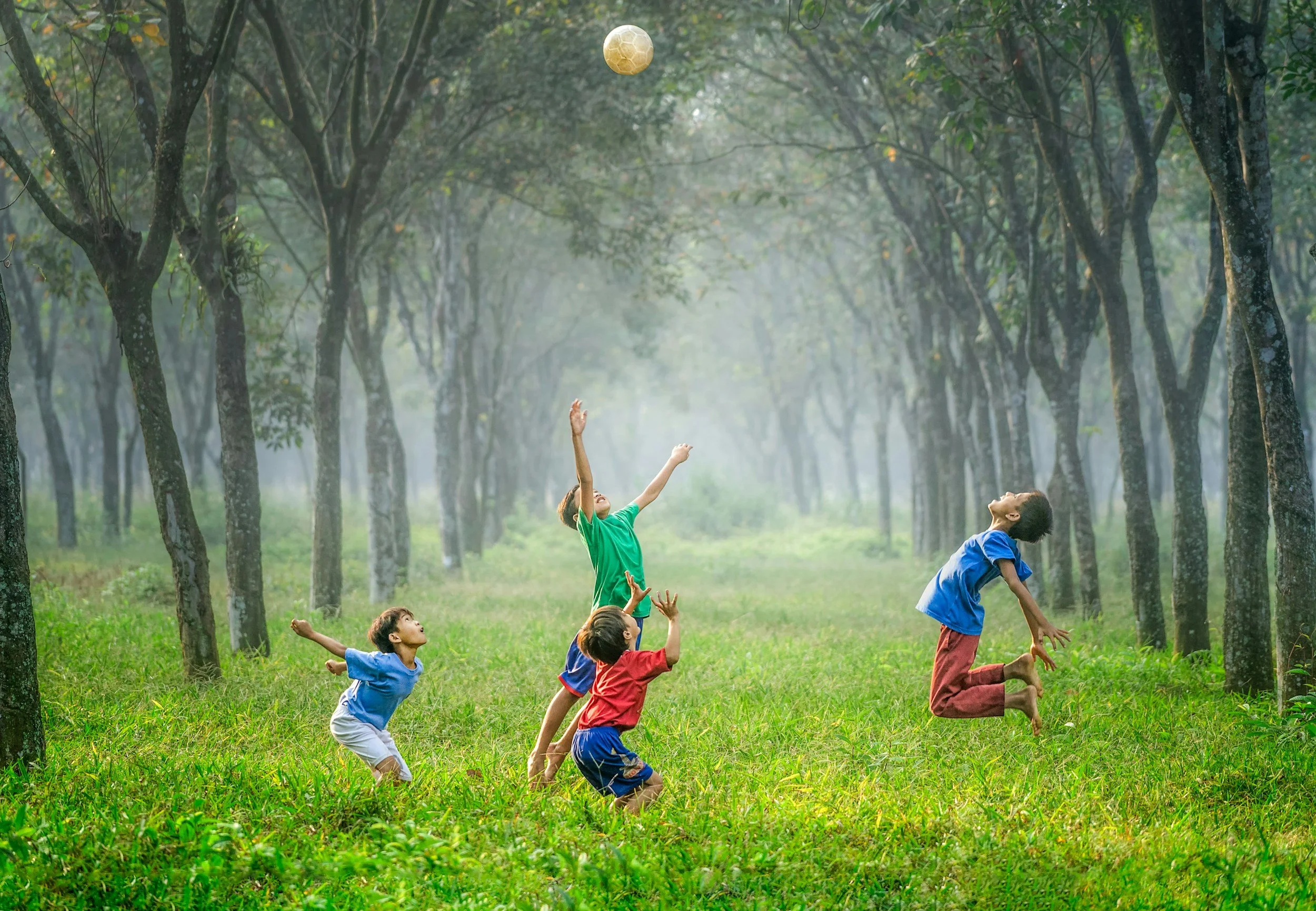
It is common knowledge that play is beneficial for children.
It makes them happy, releases energy, and stimulates imagination. However, within contemporary parenting culture, childhood is increasingly shaped by subtle pressures toward measurable achievement. In this environment, many adults feel compelled to ensure that every activity produces visible learning outcomes. As a result, play is sometimes reframed as an opportunity for instruction rather than understood as a developmental process in its own right.
When adults redirect self-directed play toward predetermined outcomes, they may inadvertently disrupt the very capacities they intend to support. Focus, persistence, creativity, and intrinsic curiosity are strengthened when children sustain attention voluntarily; they are weakened when attention is repeatedly redirected toward externally imposed goals. The issue is therefore not adult involvement but the assumption that learning must always be directed to be meaningful.
Developmental research consistently demonstrates that play is not merely recreational but essential for healthy cognitive, emotional, and social development.
Before children can read fluently, solve complex problems, or follow multi-step instructions, they must first develop underlying cognitive systems that make these abilities possible. These systems, collectively referred to as executive function, include working memory, impulse control, flexible thinking, and self-regulation. Research from the Center on the Developing Child at Harvard University identifies these capacities as among the strongest predictors of academic achievement and long-term wellbeing. Crucially, executive function develops primarily through repeated, meaningful experiences rather than through direct instruction. Such experiences are most naturally encountered in play.
Core Developmental Systems Strengthened Through Play
1. Executive Function
Executive function encompasses the mental processes that enable children to plan, focus attention, remember instructions, and manage multiple tasks. Longitudinal evidence indicates that early self-regulation predicts later academic success more reliably than intelligence measures alone (Moffitt et al., 2011). During play, children practice these skills organically. They follow evolving rules, wait for turns, adapt when conditions change, and attempt new strategies after setbacks. Each of these actions strengthens neural pathways associated with persistence and adaptability. For children with additional learning needs, including attention or regulation differences, play provides repeated opportunities to rehearse these capacities in low-pressure contexts.
2. Emotional Intelligence
Children do not acquire emotional regulation solely through verbal instruction; they develop it through supported experience. Developmental psychologists describe this process as co-regulation, meaning that children learn to manage emotions through interactions that allow them to feel, express, and resolve feelings within safe boundaries. The American Academy of Pediatrics emphasizes that play supports stress regulation, resilience, and social competence. During play, children encounter frustration, excitement, disappointment, and pride. They practice repairing conflicts, negotiating roles, and tolerating uncertainty. These experiences function as rehearsal for real emotional life.
3. Language and Communication
Language development depends fundamentally on interaction. Research led by Hirsh-Pasek and Golinkoff demonstrates that guided play supports deeper vocabulary growth and conceptual understanding than direct instruction alone. Interactive environments consistently outperform passive ones in early language acquisition studies. In play contexts, language has purpose: children explain ideas, negotiate roles, narrate events, and ask clarifying questions. For children with speech or language differences, play also provides alternative channels for communication, including gesture, symbolic action, and visual storytelling. These modes broaden access to expression and comprehension.
4. Cognitive Flexibility and Creativity
Real-world problem solving rarely involves a single correct answer. Play reflects this complexity. When children build, invent, experiment, and revise, they learn that mistakes provide information and that strategies can change. This process strengthens cognitive flexibility, which is widely recognized as a foundational skill for adaptive thinking. A 2022 review published in Frontiers in Psychology links play-based learning to increases in intrinsic motivation, creativity, and persistence. Such capacities are particularly significant in rapidly changing environments that require individuals to adjust to new information and unfamiliar challenges.
5. Intrinsic Motivation
A distinction exists between compliance and curiosity. Compliance may produce immediate results; curiosity sustains long-term learning. Play activates intrinsic motivation, the internal drive to explore, master, and understand. When children experience agency in their activities, they persist longer, take intellectual risks, and recover more readily from setbacks. Intrinsic motivation has been identified as one of the strongest predictors of lifelong learning because it encourages engagement independent of external rewards.
These developmental systems become visible in everyday play. The examples below illustrate how different forms of play strengthen specific capacities.
What Different Types of Play Strengthen
Different forms of play activate distinct developmental systems; together they create a comprehensive foundation for learning. The examples below illustrate what these forms of play can look like in everyday life and the developmental capacities they strengthen.
1. Building play encourages spatial reasoning, planning, and persistence because children must predict outcomes, test structures, and revise designs.
Example: Building a Tower (Lego, Blocks, Cushions…)
What it looks like:
Your child builds something. It falls. They rebuild it. They adjust.
What it’s developing:
Executive Function – planning, sequencing, working memory
Resilience – rebuilding after collapse
Attention Regulation – sustained focus on a goal
Problem-Solving – structural reasoning and spatial awareness
Fine Motor Skills – hand strength and coordination
Language Development – explaining design choices
SEND lens:
Supports children with ADHD through goal-oriented focus bursts.
Supports autistic learners through predictable cause-effect systems.
Supports motor coordination challenges through structured repetition.
2. Pretend play strengthens empathy and perspective-taking as children assume roles and construct narratives that require understanding others’ viewpoints.
Example: Role Play (Shops, Superheroes, Doctors, Families)
What it looks like:
Roles are assigned. Rules are invented. Narratives evolve.
What it’s developing:
Cognitive Flexibility – shifting between roles and perspectives
Emotional Processing – exploring fears, power, relationships
Expressive Language – storytelling, dialogue, negotiation
Social Skills – turn-taking, collaboration, conflict repair
Theory of Mind – understanding others’ viewpoints
SEND lens:
Provides safe rehearsal space for social interactions.
Supports children with speech differences through symbolic expression.
Helps process anxiety through narrative control.
3. Physical play supports coordination, sensory integration, and regulation. Movement activates multiple neural systems simultaneously and increases levels of brain-derived neurotrophic factor, a protein associated with neural growth and memory formation.
Example: Rough-and-Tumble Play (Chasing, Wrestling, Obstacle Courses)
What it looks like:
High-energy movement, laughter, testing boundaries.
What it’s developing:
Self-Regulation – learning when to stop and modulate intensity
Executive Control – inhibiting impulses mid-play
Gross Motor Skills – coordination, balance, strength
Sensory Integration – vestibular and proprioceptive input
Social Boundaries – reading cues, respecting limits
SEND lens:
Highly regulating for children with sensory-seeking profiles.
Can reduce restlessness in ADHD by meeting movement needs proactively.
Supports body awareness in children with coordination differences.
4. Creative play fosters divergent thinking and confidence by allowing children to generate original ideas and adapt them when circumstances change.
Example: Free Creativity (Art, Music, Crafting, Inventing Games)
What it looks like:
Open-ended creation without a prescribed outcome.
What it’s developing:
Divergent Thinking – generating multiple ideas
Creative Confidence – trusting original expression
Planning & Sequencing – organizing steps in a project
Narrative Construction – explaining creative choices
Adaptability – revising when ideas don’t work
SEND lens:
Allows non-verbal expression for children who struggle verbally.
Provides sensory regulation through tactile materials.
Builds confidence through ownership of outcome.
5. Rule-based games develops working memory, patience, and strategic thinking; they also provide opportunities to practice emotional regulation in structured situations involving winning and losing.
Example: Board Games (or Structured Rule-Based Games)
What it looks like:
Turn-taking, rule-following, winning, losing.
What it’s developing:
Working Memory – remembering rules and strategies
Impulse Control – waiting for turns
Strategic Thinking – anticipating outcomes
Emotional Regulation – coping with losing
Social Reciprocity – fairness and shared structure
SEND lens:
Provides predictable frameworks for social interaction.
Helps children practice flexibility in a structured environment.
Supports emotional regulation in manageable doses.
The Challenge of Measuring Play
One reason play is sometimes undervalued is that its outcomes are not always immediately measurable. Worksheets can be counted and tests can be scored; however, qualities such as resilience, curiosity, and adaptability do not lend themselves easily to single-point assessments. Educational research has long noted that many of the most important developmental outcomes emerge gradually and are best observed across time rather than captured in isolated measurements.
Growth often appears first in subtle changes. A child may persist longer before giving up, recover more quickly from frustration, or generate more complex narratives during imaginative play. These shifts may seem minor in the moment; nevertheless, they indicate substantial neurological development. Observing such patterns provides more meaningful insight than relying solely on numerical indicators.
Indicators Parents Can Observe
Instead of asking what score a child achieved, it may be more informative to consider whether the child demonstrates increasing persistence, greater independence in problem solving, clearer explanation of ideas, or improved adaptability when circumstances change. These observations constitute developmental data. They reveal progress in underlying capacities rather than performance on isolated tasks.
The Perspective of Inclusive Development
For children with diverse learning profiles, development often proceeds unevenly. Progress may appear briefly before becoming consistent; for example, a child might pause before reacting, attempt a new strategy after difficulty, or initiate interaction spontaneously. Research on inclusive education indicates that flexible and multi-sensory learning environments enhance engagement for a wide range of learners. Play naturally provides such environments because it allows multiple entry points for participation and expression.
The Long-Term View
Play-based experiences prioritize long-term developmental capacity over short-term output. They strengthen adaptability, creativity, self-regulation, and social understanding. These traits accumulate and interact over time, forming the basis for sustained learning and wellbeing. Although they may not always produce immediate measurable artifacts, they contribute to outcomes that extend far beyond early childhood.
At Young Trees, the guiding principle is that development precedes performance. Educational environments are therefore designed to support the systems that enable learning, including emotional awareness, multi-sensory engagement, and collaborative exploration. The central question is not what a child has produced on a given day but which capacities have been strengthened. When foundational systems are robust, performance improvements follow naturally.
Final Thought
Participating in play with a child, whether by constructing imaginative worlds, inventing stories, or collaborating on creative projects, constitutes meaningful developmental work. Such experiences strengthen neural connections, support emotional regulation, expand language, and cultivate adaptability.
Play should therefore not be regarded as preparation for learning but as one of its primary forms.
References
American Academy of Pediatrics. (2018). The Power of Play: A Pediatric Role in Enhancing Development in Young Children.
Blair, C., & Raver, C. (2015). School readiness and self-regulation: A developmental psychobiological approach. Annual Review of Psychology.
Center on the Developing Child, Harvard University. Executive Function and Self-Regulation Research Briefs.
Hirsh-Pasek, K., & Golinkoff, R. (2016). Becoming Brilliant: What Science Tells Us About Raising Successful Children.
Moffitt, T. et al. (2011). A gradient of childhood self-control predicts health, wealth, and public safety. Proceedings of the National Academy of Sciences.
Ratey, J. (2008). Spark: The Revolutionary New Science of Exercise and the Brain.
CAST. (2018). Universal Design for Learning Guidelines.
Further Reading
For Parents
Alison Gopnik — The Gardener and the Carpenter
A research-informed exploration of child development that challenges the idea that parents must “shape” children into success. Gopnik argues instead that children grow best when adults create supportive environments for exploration, curiosity, and independence.Peter Gray — Free to Learn
Drawing on evolutionary psychology and education research, Gray examines how play functions as a natural learning system. The book explains why self-directed exploration supports resilience, creativity, and problem-solving more effectively than overly structured instruction.Daniel Siegel & Tina Payne Bryson — The Whole-Brain Child
This accessible neuroscience-based guide explains how children’s brains develop and offers practical strategies for supporting emotional regulation, connection, and resilience. It translates complex brain science into everyday parenting approaches.
For Educators
Center on the Developing Child, Harvard University — Executive Function Resources
A collection of research briefs and practical tools explaining how executive function develops, why it predicts long-term outcomes, and how learning environments can intentionally support it.National Association for the Education of Young Children — Developmentally Appropriate Practice
Guidelines grounded in decades of developmental research that outline how teaching methods, environments, and expectations should align with children’s developmental stages.CAST — Universal Design for Learning Framework
A research-based framework for designing learning environments that support diverse learners by providing multiple ways to engage, understand, and express knowledge. Widely used in inclusive education systems.